/ Overview
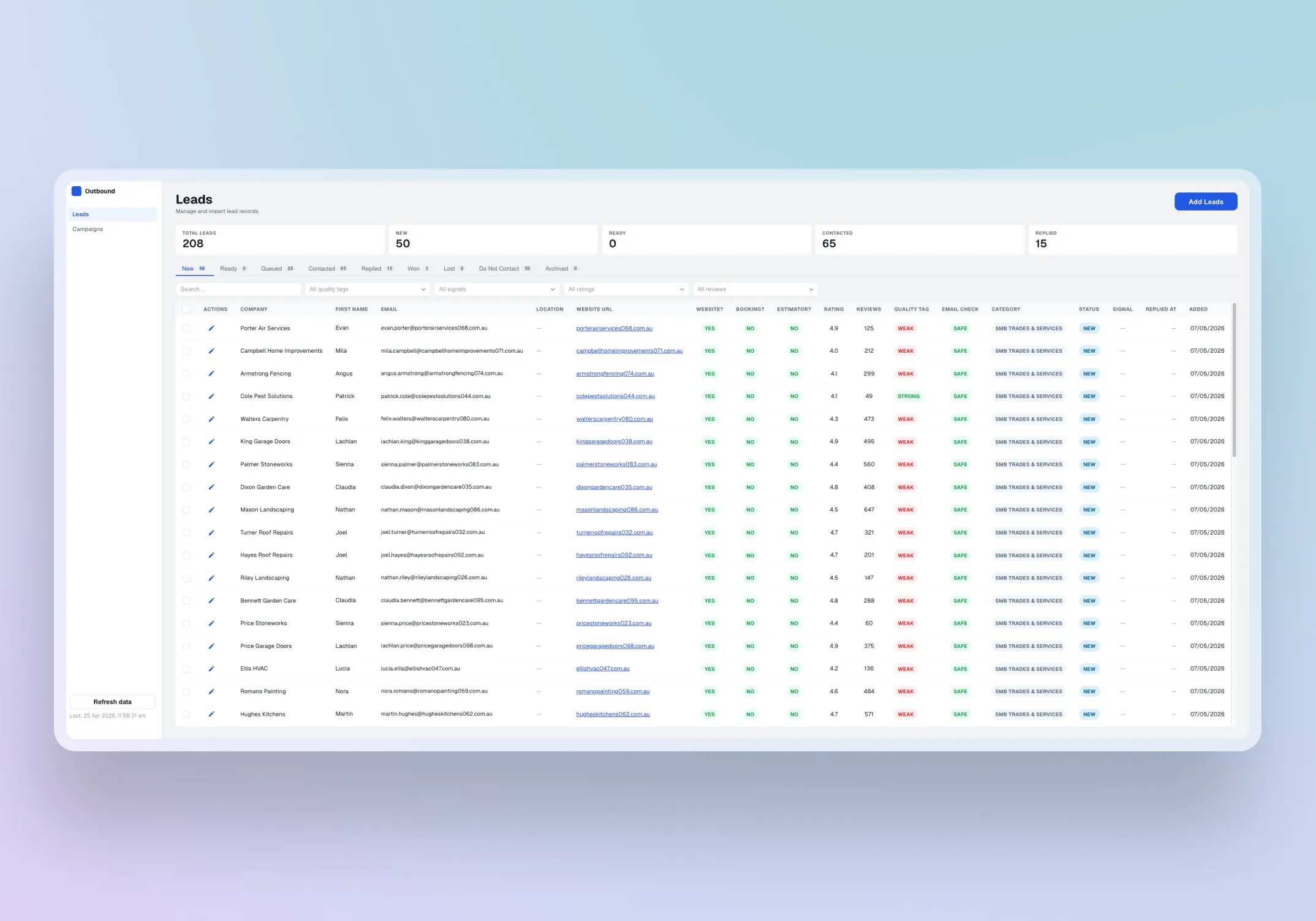
I designed an Instant Estimate System for a local pest control business to convert more website visitors into structured quote enquiries.
The business relied on phone calls and generic contact forms, which created friction for customers who wanted a quick idea of cost before reaching out. Many were browsing after hours, comparing providers, or unsure whether their issue warranted a full quote.
Rather than designing a price calculator, I framed the project as a lead capture system with two distinct flows:
The owner setup flow lets the business owner configure services, pricing ranges, and property variables.
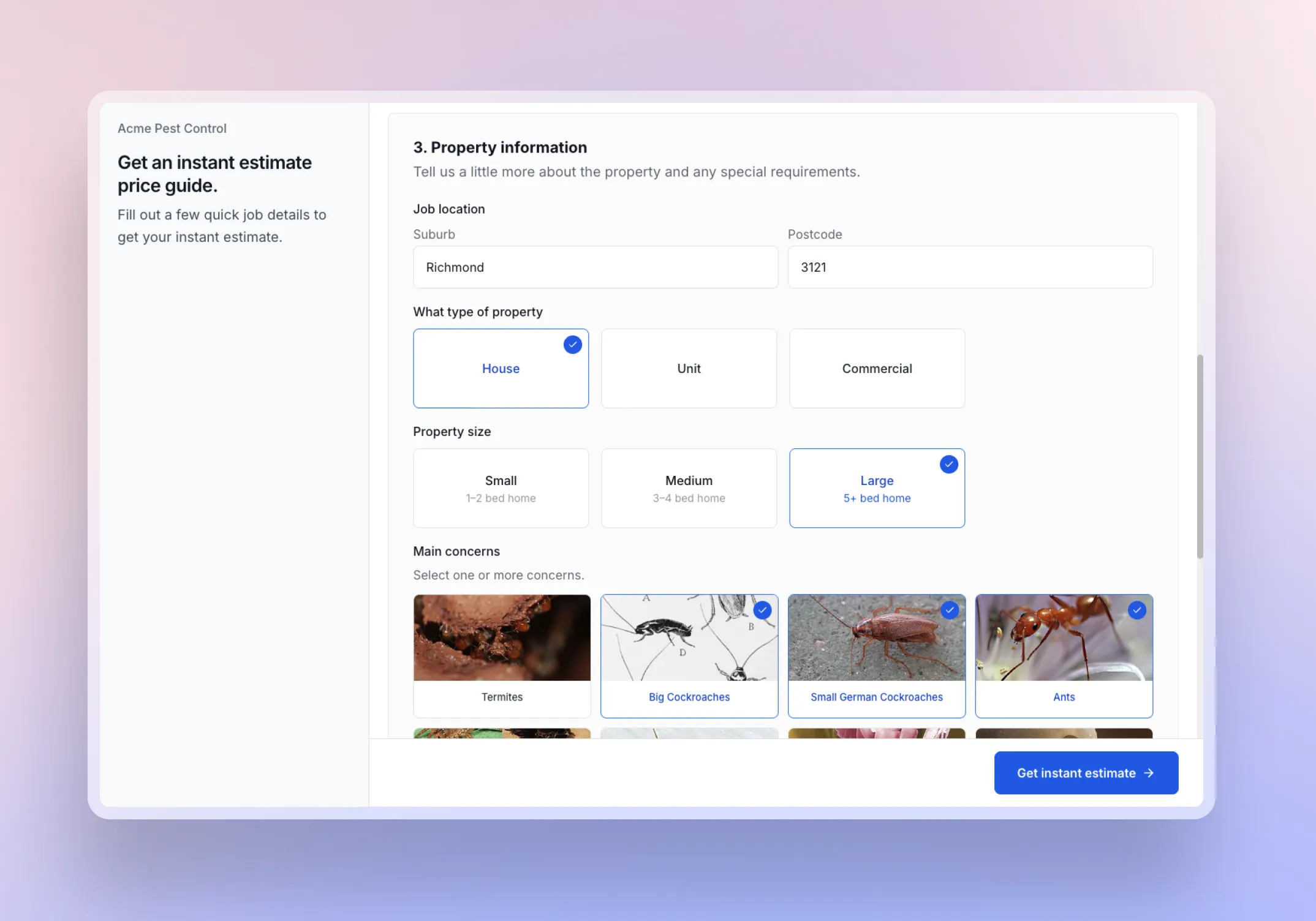
The customer-facing flow guides visitors through a short estimate journey and captures structured enquiry details.
Together, the two flows create a system the business can manage independently while giving customers immediate value.
/ Problem statement
For pest control customers, pricing is usually the first question. But most business websites only offer two options: call now or submit a generic contact form. Both create hesitation, especially for customers still comparing or browsing outside business hours.
The existing website gave customers no immediate value and gave the business no structured detail. Generic submissions lacked service type, property context, and job information, making every lead a phone call just to understand the enquiry.
The gap between customer pricing interest and business follow-up was too wide. There was no guided path that helped customers understand likely costs while giving the business what it needed to respond quickly.
/ My role
This was a self-directed product design and build project. I led the work end to end, covering product framing, UX flow design, interface design, product copy, automation logic, and QA thinking.
I also built the working application using AI-assisted development, delivering a full stack system with a React frontend and a backend database to capture and store lead details.
I approached the project as both a UX problem and a business conversion problem. The experience needed to feel simple for customers, but commercially useful for the business owner.
/ Approach
Two-sided system design
The system needed to work for two users.
The business owner needed a setup flow to configure services, pricing ranges, and property variables without technical help.
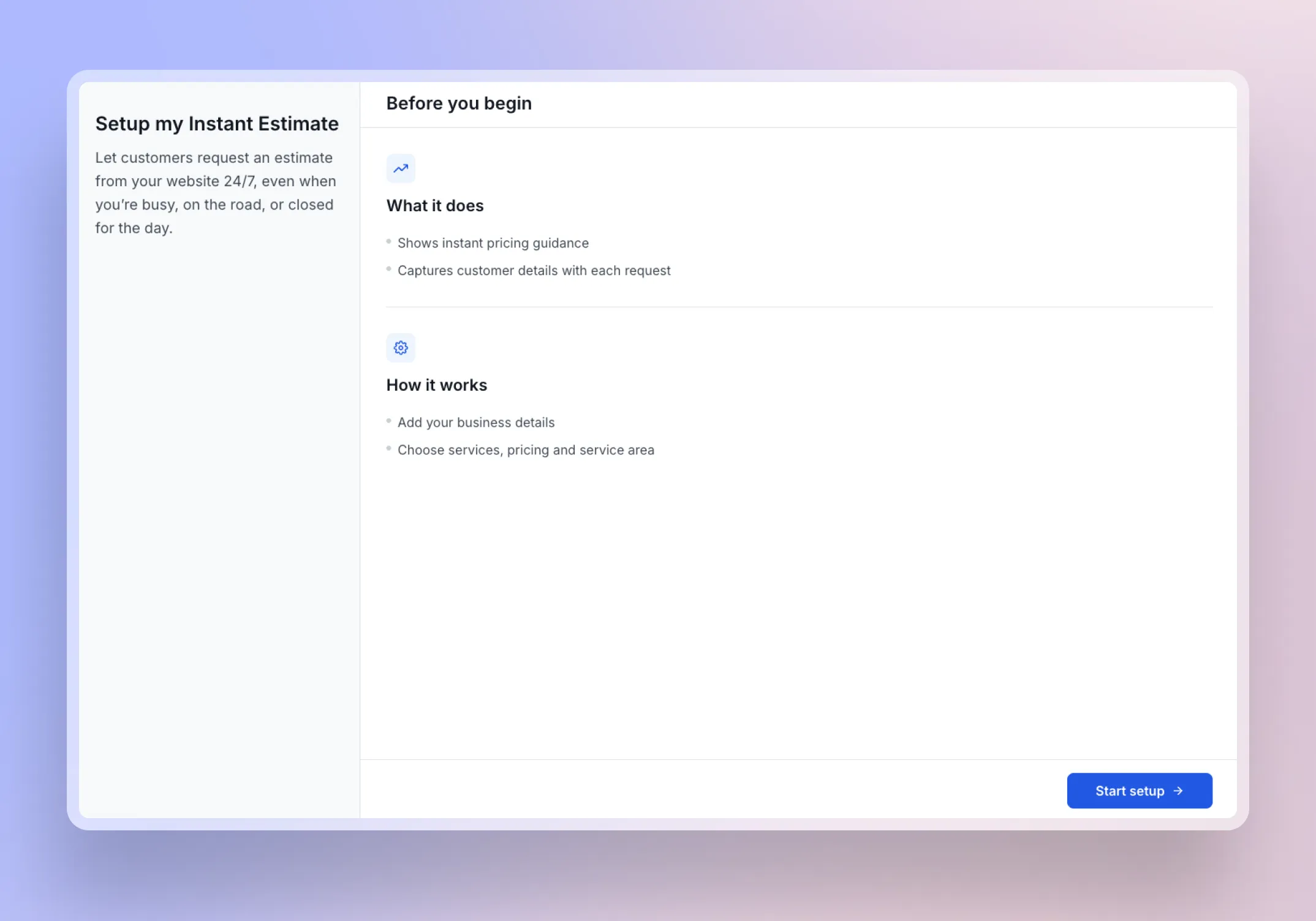
A before you begin page helps set the scene and expectation before commencing with the setup flow.
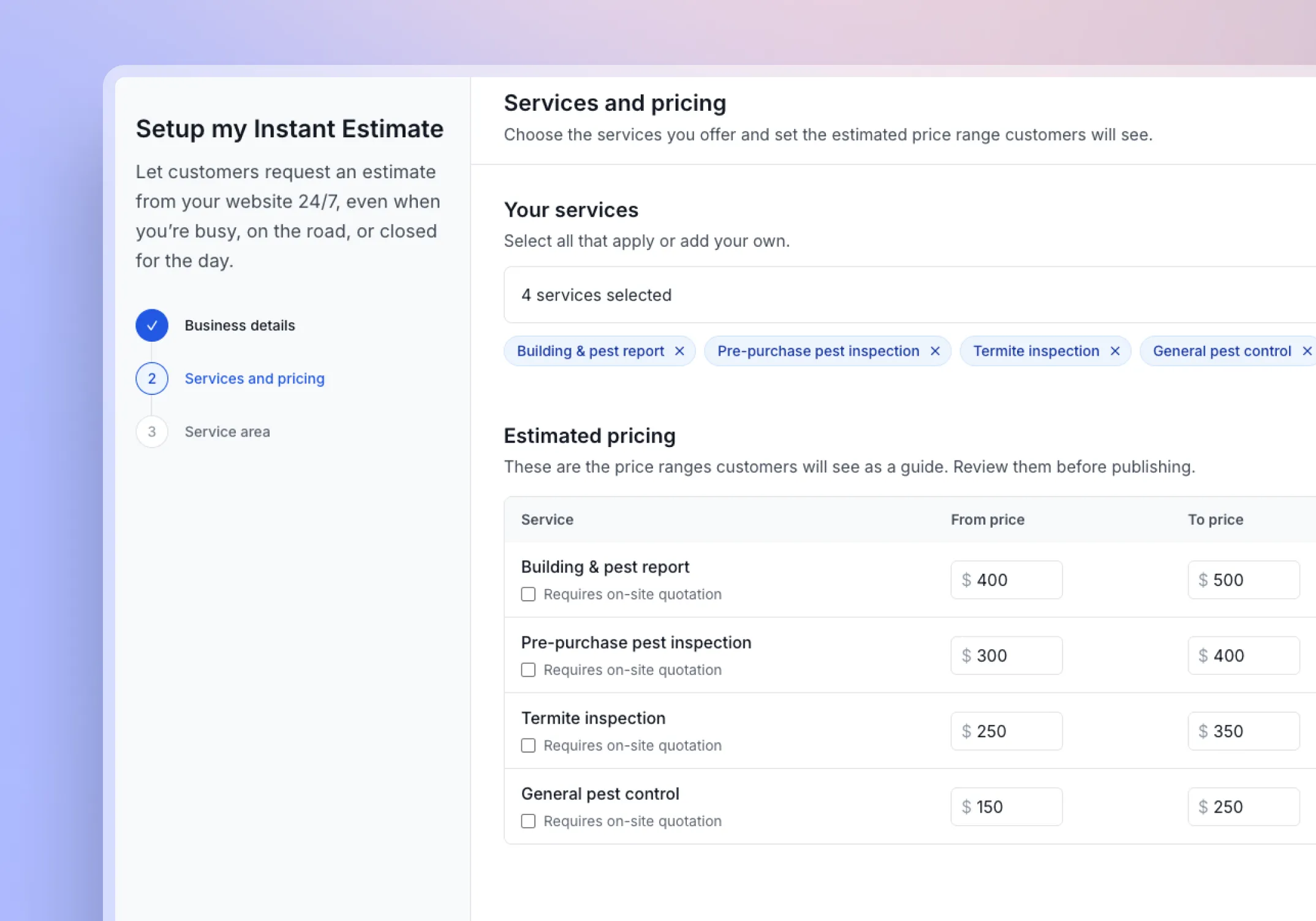
Questions are segmented into simple steps to minimise cognitive load for user and remain focussed on each section.
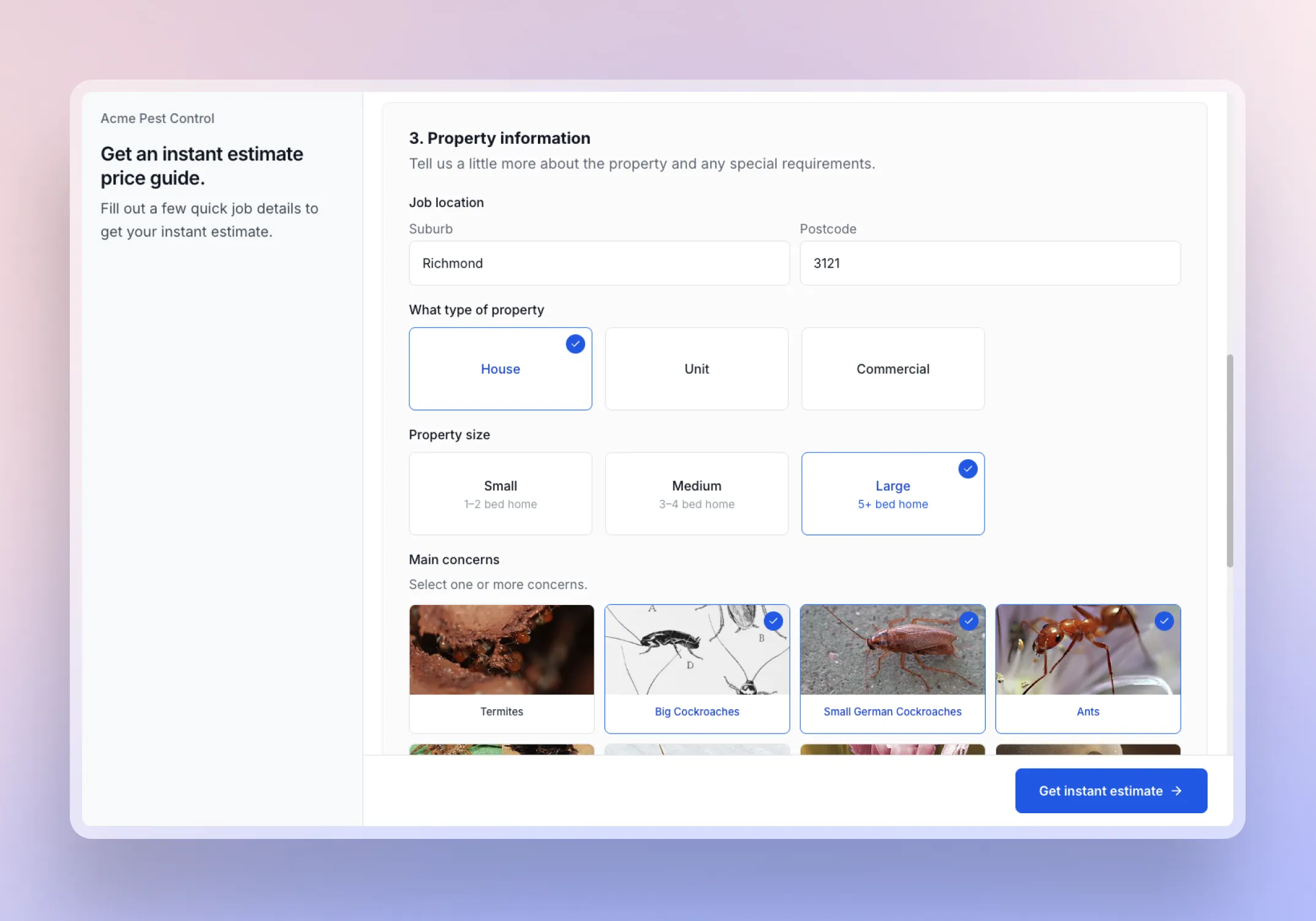
The customer needed a guided estimate journey that felt fast and gave immediate value. I designed both flows as connected parts of one system, where changes in the owner setup directly shape the customer experience.
Lead capture, not a calculator
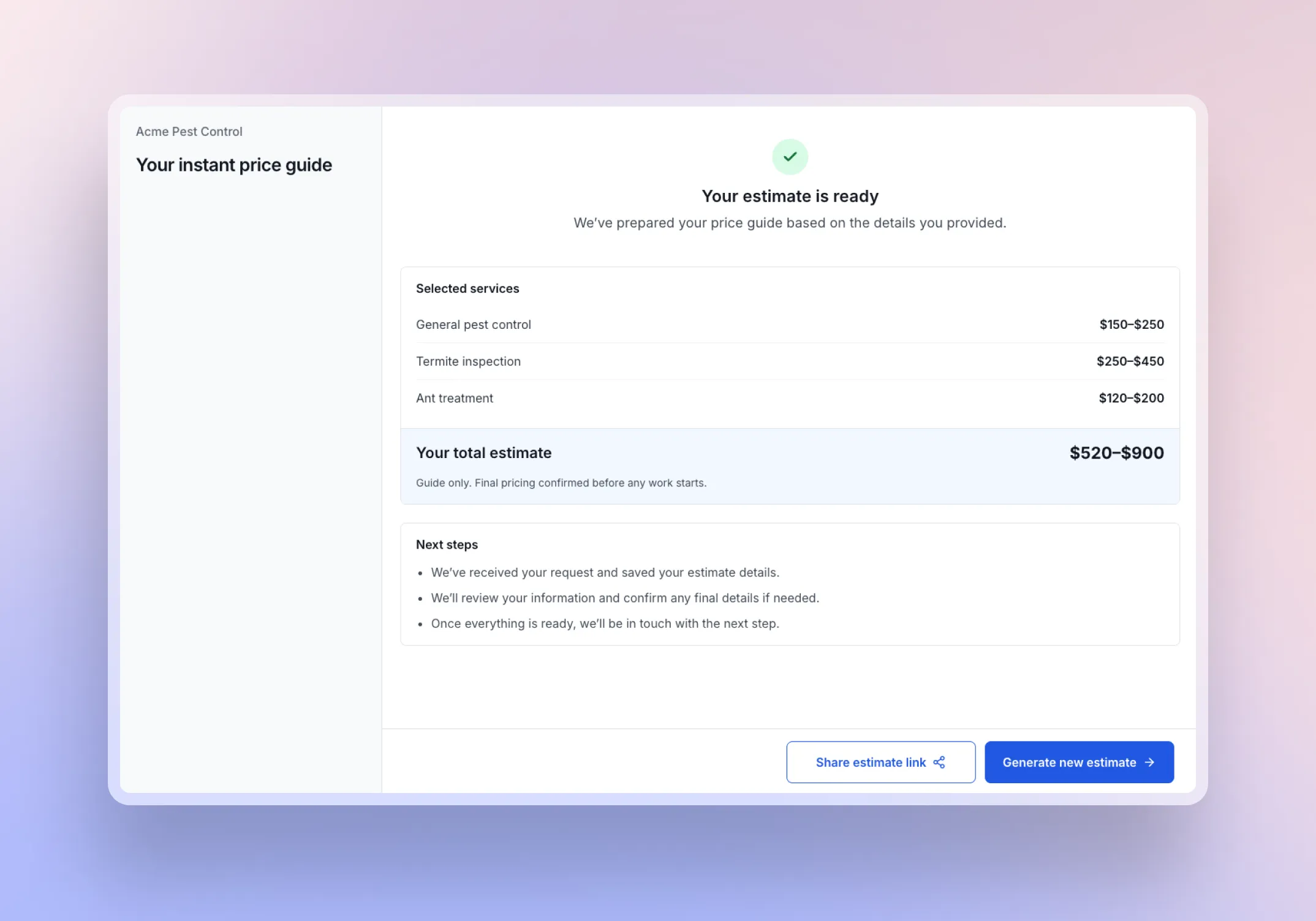
A calculator ends at the number. This system needed to continue past the estimate by encouraging enquiry submission and giving the business enough context to follow up.
Progressive disclosure
The business owner flow breaks the enquiry into short steps. The owner only see questions relevant to the current stage, reducing perceived complexity and supporting responsive completion across devices.
Estimate ranges for trust
A fixed price could erode trust if the final cost changed after inspection. An indicative range gave customers useful context while allowing the business to confirm details during follow-up.
Focused MVP
I kept scope to one clear job: turn pricing interest into a structured enquiry. No bookings, dashboards, or payment flows until the core journey was validated.
Tech and build
I designed and built the working system, covering the estimate flow, automation logic for submissions, structured business notifications, and customer confirmation messaging. The system handles after-hours enquiries without manual intervention.
/
AI &
Design workflow
I defined the product problem first, then designed both the owner setup flow and the customer-facing estimate journey as connected parts of a single system.
Mapped both flows end to end
I defined the owner setup journey covering service configuration, pricing ranges, and property variables, then mapped the customer flow from landing through to submission, business notification, and confirmation. This helped identify where each flow needed to give value, collect information, and manage expectations.
Designed the step-by-step estimate flow
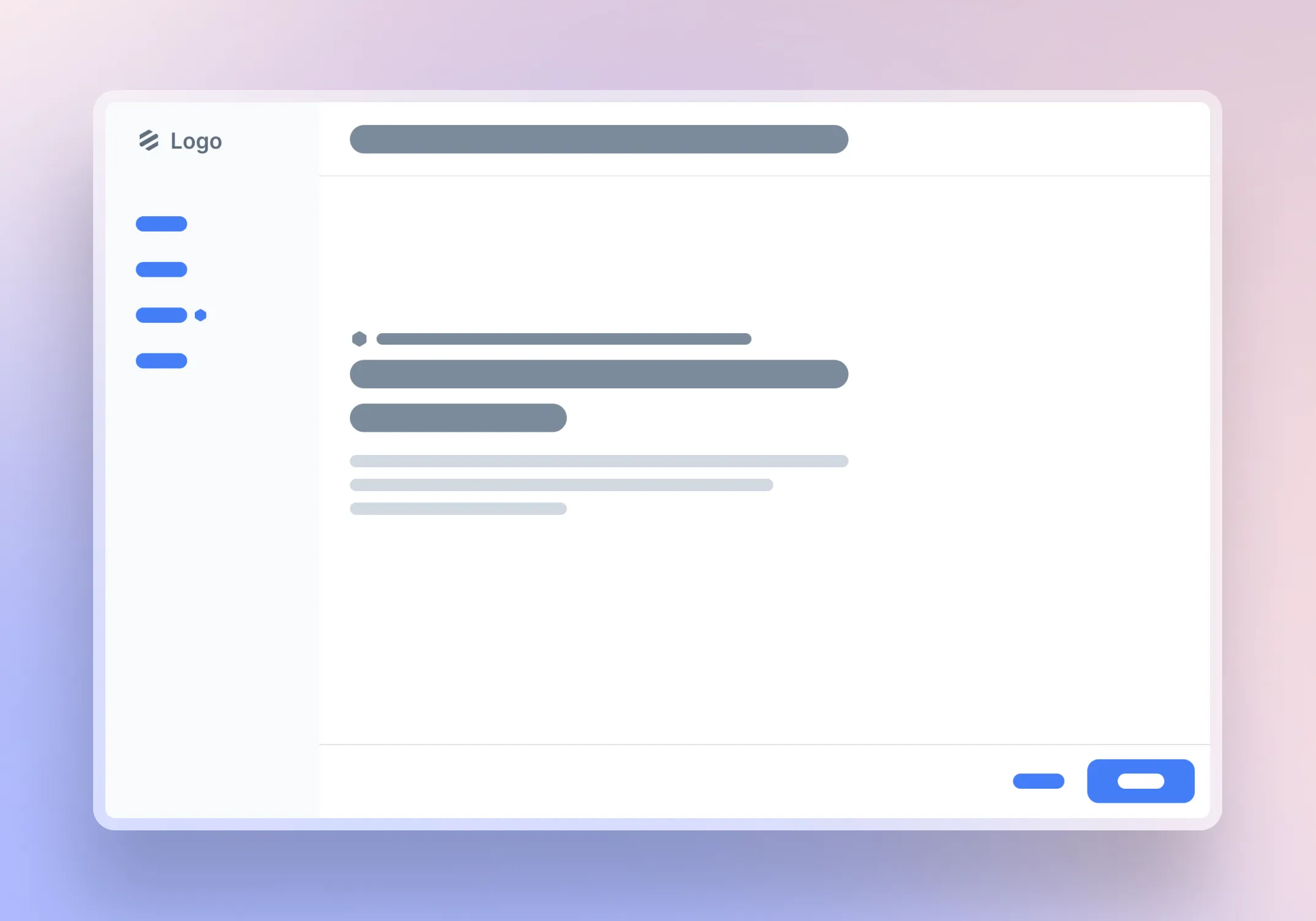
I structured the customer interface around focused screens using low-fi designs in Figma as a starting point: contact details, service selection, property and job context, then the estimate result. The owner setup flow was designed to be simple enough to configure without technical support, with changes flowing directly into the customer experience.
Wrote product copy across the full journey
Form labels, helper text, CTAs, estimate result messaging, and confirmation copy. The principle was clarity over cleverness: customers should immediately understand what is needed, why, and what happens next.
Built the system using AI-assisted development
I used AI-assisted development to build the full stack application, covering the React frontend, backend database for lead capture, submission automation, business notifications, and customer confirmation. Design decisions guided the build throughout, ensuring the working product matched the intended experience.
Reviewed edge cases and QA
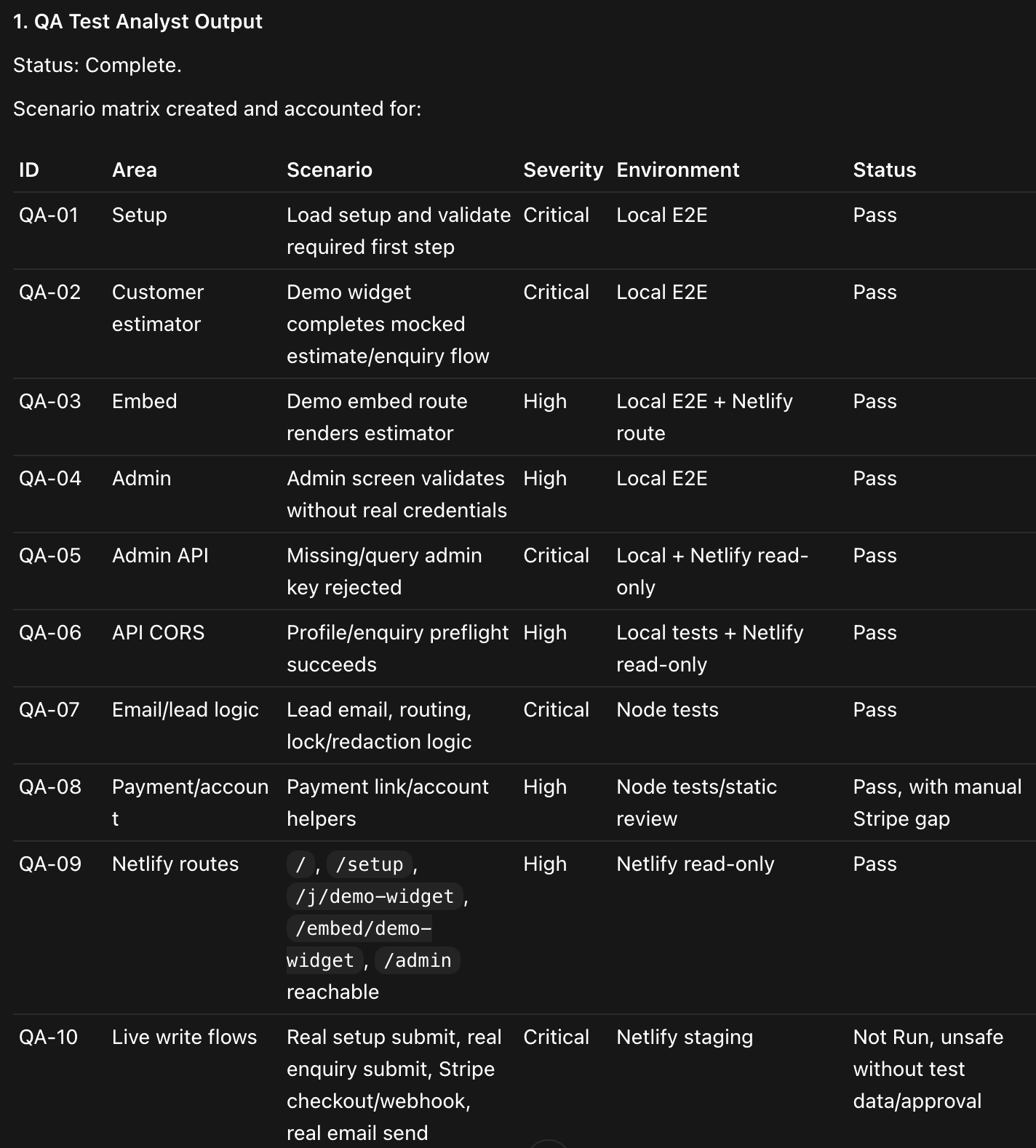
As a designer rather than a developer, I crafted AI skills to systematically review the codebase for technical debt, code errors, and functional gaps. Once the AI-assisted QA pass was clean, I ran through the full journey manually to verify everything worked as expected across responsive breakpoints, field validation, incomplete states, error messaging, and after-hours behaviour.
Product walkthrough showing the owner setup flow, customer estimate journey, and structured lead capture experience.
/ Challenges & Solutions
Reducing friction without weakening lead quality
I used progressive disclosure to collect information in smaller steps, focusing the MVP on highest-value inputs: service type, suburb, property context, and contact details. Easy for customers, useful for the business.
Giving pricing context without overpromising accuracy
Pest control pricing varies by property, severity, and access. I designed the result around an indicative estimate range with clear supporting copy, balancing transparency with operational flexibility.
Making the experience feel useful before asking for commitment
By the time customers reach submission, they have selected a service, provided context, and received an estimate. The interaction shifts from "send us your details" to "get an estimate and a clear next step".
/ Outcome & next steps
The system replaced a passive contact form with a guided, conversion-focused enquiry experience designed to reduce the gap between customer pricing interest and business follow-up.
For customers, it reduced uncertainty with an indicative estimate and a clear next step. For the business, it created a structured lead capture journey that works even when the owner is unavailable.
The strongest decision was keeping the system focused. The MVP addressed one outcome: helping the business capture more qualified website leads. That focus made it easier to complete, easier to understand, and easier to improve.
Next steps include booking conversion after estimate submission, automated follow-up reminders, review request flows, and AI-assisted lead triage to help prioritise urgent or high-value enquiries.